
Why Ninh Binh
Why Ninh Binh
Halong Bay, without the boat cruise
Ninh Binh gives you the same soaring limestone karst that makes Halong Bay famous — but along rivers that wind between the towers and through rice paddies, without the overnight cruise, the harbour crowds or the murky water. Tam Coc's river run has long been nicknamed 'Halong Bay on land', and once you've been rowed into a cliff-ringed lagoon through a low cave mouth, the comparison makes sense.
A rare double heritage
The Trang An Landscape Complex is Vietnam's only UNESCO mixed World Heritage Site — recognised for both its culture and its nature, one of only around forty such sites in the world. Its caves hold traces of continuous human life stretching back more than 30,000 years, and its valleys hold Hoa Lu, the capital of Vietnam a thousand years ago. You're gliding through deep time as well as spectacular scenery.
Rowed by foot, through the rock
The signature image of Ninh Binh is the boatman — often a local woman — working the oars with their feet to spare their arms on the long trips, rowing you silently through flooded tunnels so low you duck under the stone. It's a genuinely singular way to see a landscape, and unlike anything you'll do in Hanoi itself.
The two waterways
The two waterways
The single decision that shapes a Ninh Binh day is which river you're rowed along. They're a short drive apart and genuinely different — most day tours pick Trang An, but here's the honest trade-off.
Cave tunnels, temples & no hawkers
The longer cruise — about two to three hours — through a chain of long, low flooded cave tunnels into hidden lagoons, stopping at riverside temples. It's the UNESCO core, and a strictly enforced no-selling rule means you glide undisturbed. This is what the bestselling day tours run, and the better choice for the caves-and-history experience.
Rice paddies & the feet-rowing
The shorter run — around an hour and a half to two — down the Ngo Dong river through three caves and, above all, the rice paddies: this is the 'Halong Bay on land' postcard and the classic feet-rowing scene. The catch is persistent floating vendors. Choose Tam Coc in the golden harvest season, or when the paddy views matter more than the caves.
The routes
Pick your Trang An route
If you cruise Trang An, there are three set routes, each a different mix of caves, temples and scenery. A day tour usually runs the standard route within its two-hour window; going independently, you can ask for the one you want.
- 1
Route 1 — the history route
The longest and most popular, around three to four hours, taking in nine caves and three temples including the Trinh and Tran temples. The most cultural stops, and the classic first-timer's choice if you have the time.
- 2
Route 2 — the scenery route
About two to two and a half hours, four caves and four temples, with the best open karst scenery and birdlife, passing near the areas used for Kong: Skull Island. The pick for landscape and photography over temple-hopping.
- 3
Route 3 — the Kong route
Around three hours, three caves and three temples, and the one route that visits the recreated Kong: Skull Island film-set village. The original 2016 sets were dismantled in 2019 to protect the UNESCO site; a rebuilt village stands here now. Best for the movie angle.
What you'll see
What you'll see
Beyond the boat, a Ninh Binh day threads together a viewpoint climb, a thousand-year-old capital and some of Vietnam's grandest temples.
500 steps to the stone dragon
The climb everyone comes for: roughly 500 uneven stone steps up Lying Dragon Mountain to a stone dragon sculpture along a knife-edge ridge — 'the Great Wall of Ninh Binh'. It's short, steep and about fifteen minutes up, and the view over the Ngo Dong's meander through the paddies is the money shot of the whole region.
Rowed through the flooded caves
The heart of the boat ride: gliding through long, low limestone tunnels — the longest at Tam Coc runs about 127 metres, the ceiling low enough to duck — that open without warning into silent, cliff-walled lagoons. There's no motor, only the dip of the oar and the drip of the rock.
Vietnam's first capital, 968 AD
Before Hanoi, there was Hoa Lu: King Dinh Bo Linh made it the capital of Dai Co Viet in 968 AD, and temples to the Dinh and Le kings still stand among the karst. It's the history half of the day, and the reason the landscape is a cultural heritage site as much as a natural one.
The oars worked by foot
Watch the boatmen — often local women at Tam Coc — lean back and row with their feet, a technique developed to endure hours on the water. It's the image that defines Ninh Binh, and a quietly extraordinary thing to witness up close from your seat in the sampan.
The largest pagoda in Vietnam
Some itineraries add Bai Dinh, the biggest Buddhist temple complex in the country — an ancient pagoda founded in 1121 beside a vast modern complex of some 700 hectares, lined with hundreds of stone arhat statues. A giant-scale counterpoint to the intimate boat ride.
Ninh Binh mountain goat
The regional specialty at most tour lunches is de nui, Ninh Binh's mountain goat, served several ways; vegetarian options are standard. A small, genuine taste of the province between the boat and the climb.
When to go
When to go
Ninh Binh is a year-round day trip, but two windows are worth knowing about — one for the rice, one for the heat.
The golden rice: late May to June
The single most photogenic window is the rice harvest, when the paddies along the Ngo Dong at Tam Coc turn brilliant gold. It lasts only about two to three weeks in late May and June, so if the golden-paddy scene is your reason for coming, time it carefully — and choose Tam Coc over Trang An that fortnight.
Dry season for reliable weather
Roughly November to April is the dry season, with the most reliable weather and comfortable temperatures; the paddies are green and photogenic in earlier summer too. It's the safe choice if you want a pleasant day without gambling on the harvest window.
Beat the summer heat
June to August is hot and humid, and a two-to-three-hour boat ride in the midday sun is a lot. Whenever you go, do the boat and the Mua Cave climb early morning or late afternoon — it dodges both the worst heat and the biggest crowds at the ticket counters.
Early or late beats the buses
Trang An draws the tour buses and can queue at the ticket counters mid-morning; both boat and climb are quieter and cooler at the ends of the day. A tour's timing usually threads this for you, but if you're independent, start early.
Do it yourself, or take the tour?
Do it yourself, or take the tour?
| Do it yourself | Guided day tour | |
|---|---|---|
| Getting there | Train or bus from Hanoi (~2 hrs, ~US$5–10), then a Grab or taxi between sites | Round-trip transfer from your Hanoi hotel, driven for you |
| The sites | You reach Hoa Lu, the boat and Mua Cave (~20 km apart) on your own | All linked in one day, in order, with a guide |
| Tickets | Bought on site — boat ~US$10, plus Mua Cave and entries; queues at peak | Boat and entry tickets included |
| Cost | Cheaper on paper if you organise it all yourself | ~US$49, everything bundled with lunch and a guide |
| Best for | Staying overnight, cycling the back-roads, boating at golden hour | Seeing the highlights in one day from Hanoi without the logistics |
Ninh Binh, in pictures
Ninh Binh, in pictures
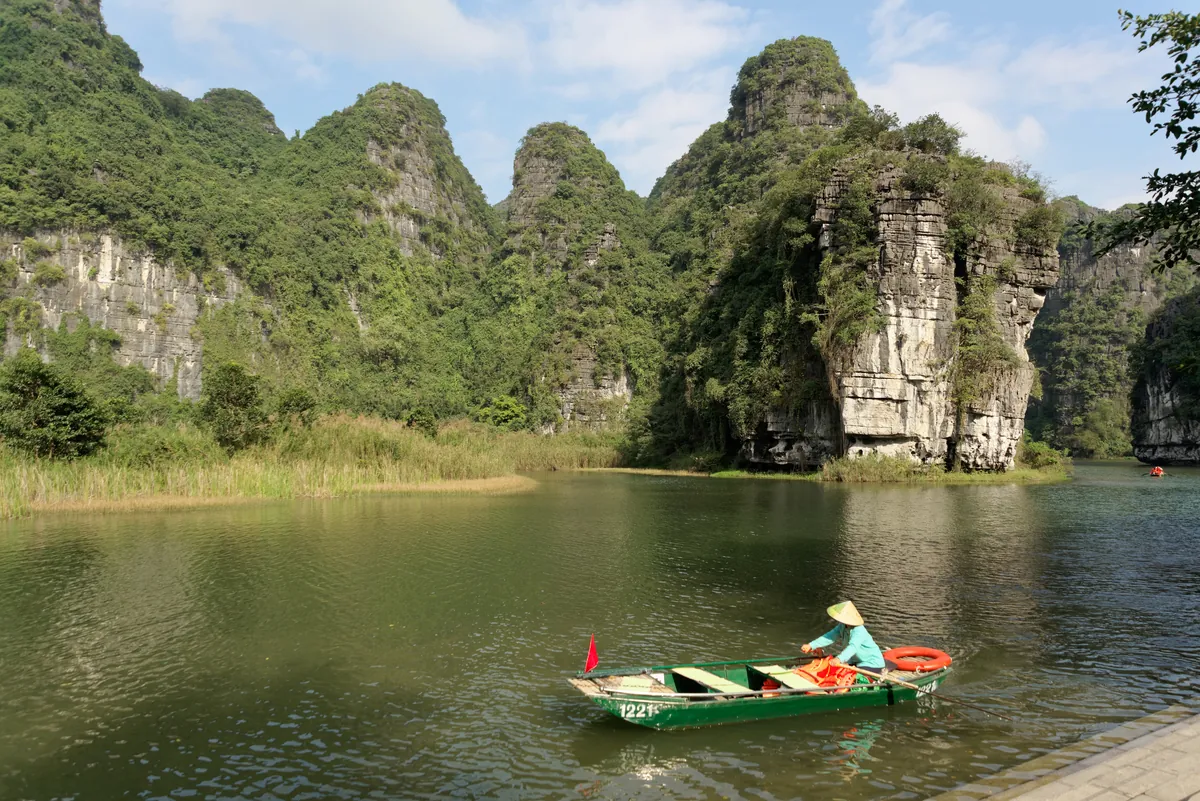
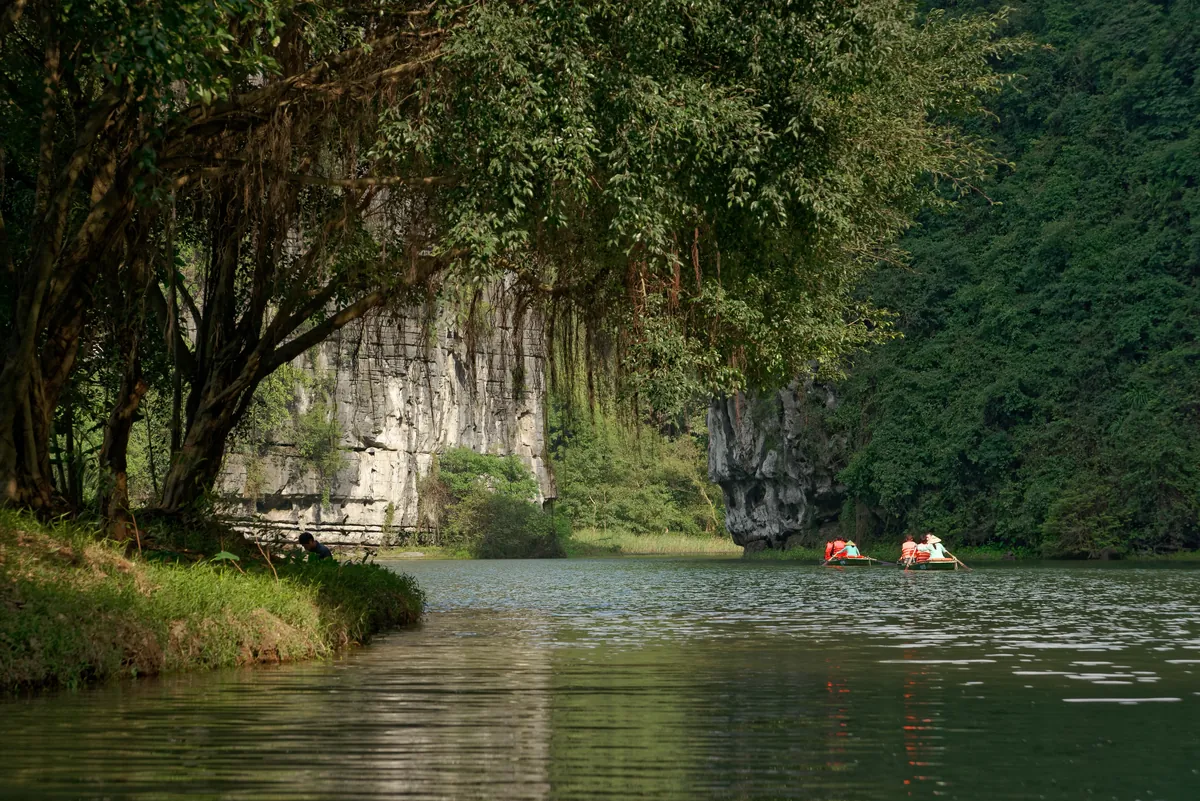
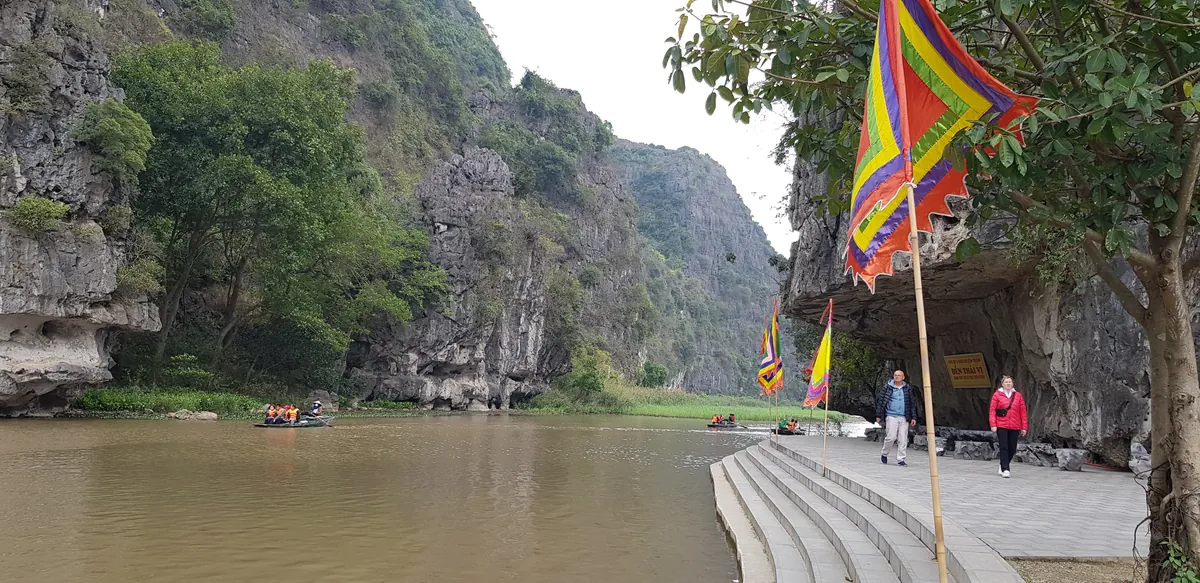
The rice-paddy view from Mua Cave, the rowed sampans, the karst towers and the flooded caves.

Ninh Binh day trips from Hanoi
Find a Ninh Binh day for your dates
Every tour below is bookable through GetYourGuide, with live availability and the final price shown in your own currency before you pay — round-trip transfer from Hanoi, the boat, entries and lunch included.
Planning your day
Planning your day
It's a full ~12-hour day
Ninh Binh is about two hours each way from Hanoi, so a day tour runs roughly twelve hours door to door — an early Old Quarter pickup, Hoa Lu and lunch, the boat, the Mua Cave climb, and back around seven. Keep the day clear and don't plan a big night after it.
Wear proper shoes for the climb
The Mua Cave steps are uneven stone and can be slick; wear grippy shoes and bring water, especially in summer. The boat itself is easy and seated, but the sun on the water is strong — a hat and sunscreen make the cruise far more pleasant.
Trang An or Tam Coc — decide first
Most day tours cruise Trang An (cave tunnels, temples, no hawkers); pick a Tam Coc itinerary if you're visiting in the late-May-to-June rice harvest or want the paddy scenery over the caves. It's the one choice worth making before you book.
Carry cash and tip the rower
The rower's tip isn't included and is customary — they row for hours, so a few dollars or fifty to a hundred thousand dong is normal and appreciated. At Tam Coc, expect floating vendors pressing you to buy drinks for your rower; a polite decline or a small tip settles it.
Consider staying the night
A day trip covers the highlights, but an overnight in Tam Coc lets you boat at golden hour, cycle the back roads, and add Bai Dinh or Bich Dong without the rush. If Ninh Binh is the part of Vietnam you're most excited about, one or two nights rewards it. Free cancellation on the tour lets you hold a date either way.
Planning a Ninh Binh day trip
Planning a Ninh Binh day trip
Trang An or Tam Coc? Which Ninh Binh Boat Ride to Choose
Cave tunnels and temples with no hawkers, or the rice-paddy river and the classic feet-rowing — the one decision that shapes a Ninh Binh day, decided honestly.
Read more →THE THREE ROUTESThe Three Trang An Boat Routes (and the Kong: Skull Island Set)
Route 1 for history, Route 2 for scenery, Route 3 for the film set — the sub-choice no aggregator explains, and how to get the one you want.
Read more →THE VIEWPOINTMua Cave: 500 Steps to the Dragon and the Best View in Ninh Binh
The short, steep climb up Lying Dragon Mountain to the stone dragon ridge — how hard it is, when to go, and why it's the money shot.
Read more →THE DAY, MAPPEDA Ninh Binh Day Trip From Hanoi: The Day, Mapped
The 12-hour shape, the ~90 km each way, and the honest case for a tour versus doing it yourself across sites 20 km apart.
Read more →THE HISTORYHoa Lu: Vietnam's First Capital, 968 AD
Before Hanoi there was Hoa Lu — the tenth-century capital of Dai Co Viet among the karst, and the reason Ninh Binh is a cultural heritage site as much as a natural one.
Read more →WHEN TO GOThe Best Time to Visit Ninh Binh: The Golden Rice and the Seasons
The two-to-three-week golden harvest, the reliable dry season, and how to dodge the heat and the crowds whenever you come.
Read more →Questions
Ninh Binh day-trip questions
Trang An or Tam Coc — which boat ride should I choose?
Trang An is the longer cruise (two to three hours) through flooded cave tunnels and past temples, in the UNESCO core, with a strictly enforced no-selling rule so you're not hassled — and it's what the bestselling day tours run. Tam Coc is shorter (about 1.5–2 hours), more about the rice-paddy scenery and the classic feet-rowing, but with persistent floating vendors. Most day-trippers pick Trang An; choose Tam Coc in the golden rice-harvest season or if the paddy views matter most.
Is the Mua Cave climb worth it, and how hard is it?
Yes — it's the money shot of Ninh Binh. It's roughly 500 uneven stone steps up Lying Dragon Mountain to a stone dragon on the ridge, about fifteen minutes of steep climbing, and the view over the Ngo Dong winding through the rice paddies is unforgettable. It's manageable for anyone with reasonable mobility taking their time; wear proper shoes, bring water, and go early or late to avoid the heat and crowds.
Is a day trip enough, or should I stay overnight?
A day trip comfortably covers the highlights — the boat, Mua Cave and Hoa Lu — but it's a long day of about twelve hours with roughly four on the road. Staying one or two nights in Tam Coc or Ninh Binh lets you boat at golden hour, cycle the karst back-roads, and add Bai Dinh or Bich Dong without rushing. If Ninh Binh is a highlight of your trip, the overnight is worth it; if you're short on time, the day tour delivers the essentials.
How far is Ninh Binh from Hanoi?
About 90 to 100 kilometres south, roughly two hours each way by road, or a similar time by train to Ninh Binh station. There's no single site — Hoa Lu, the boat piers and Mua Cave are spread across around twenty kilometres of karst valleys, which is part of why a tour that links them in order is so convenient for a day trip.
Do I tip the boat rower?
Yes — it's customary and appreciated, though not included. The rower works hard for two to three hours, so a few US dollars or around fifty to a hundred thousand dong is normal. At Tam Coc in particular, floating vendors will press you to buy drinks or snacks for your rower mid-river; a polite decline or a modest direct tip handles it.
What is the Kong: Skull Island connection?
Parts of the 2016 film Kong: Skull Island were shot in the Trang An area, and Route 3 of the Trang An boat cruise visits a recreated Skull Island village. The original film sets were dismantled in 2019 to protect the UNESCO site, and a rebuilt village now stands for visitors. If the movie is a draw, ask for Route 3 — though most standard day tours run the shorter route within their time window.
Still choosing your dates — or chasing the golden rice?
Leave your email and roughly when you're in Hanoi — we'll send a short rundown of how the Ninh Binh day works, which boat ride to pick, and when the rice paddies turn gold.